Advanced Drone Obstacle Avoidance: Revolutionizing Aerial Safety
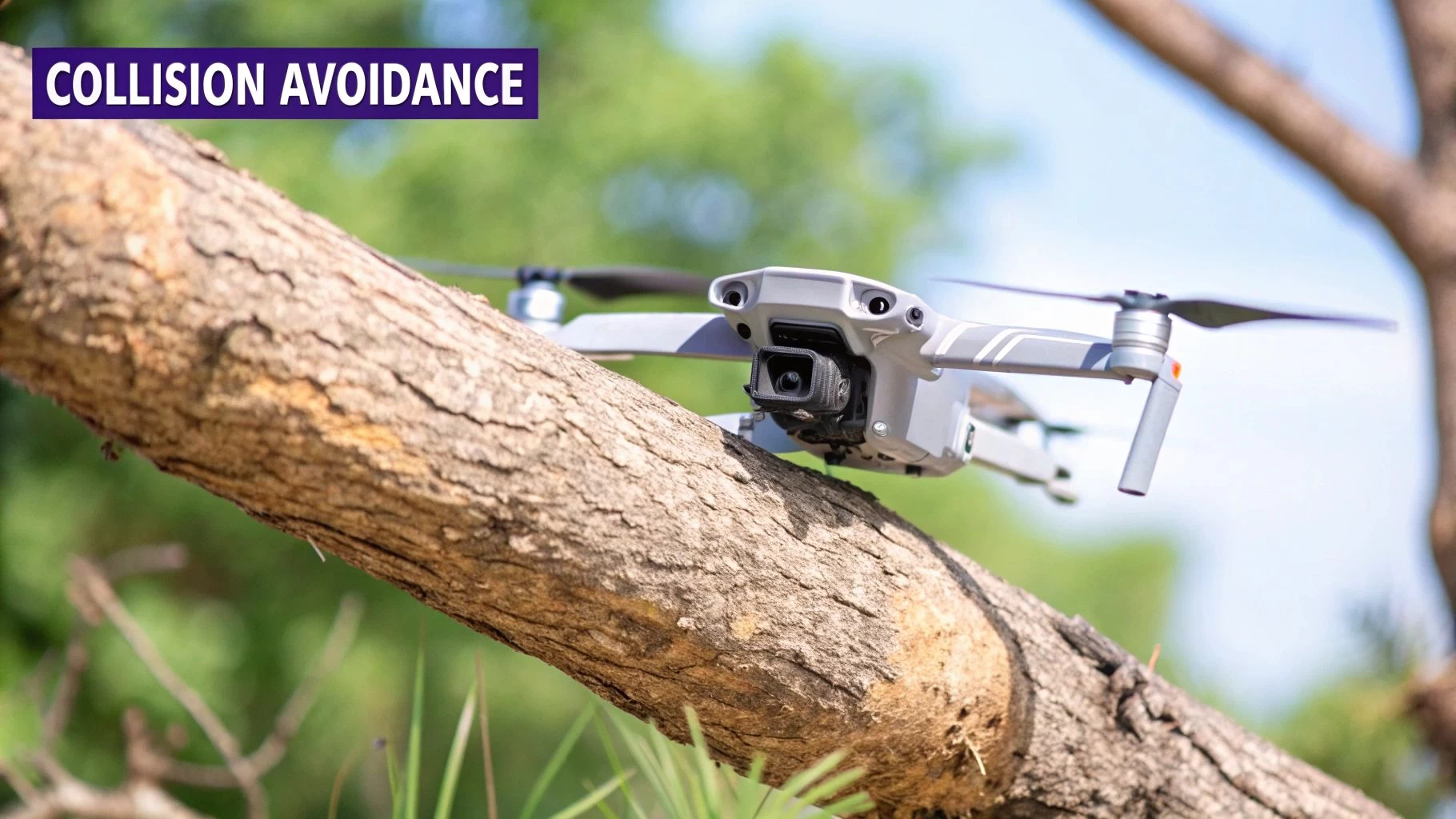
Drones have rapidly transitioned from niche gadgets to essential tools across various industries, including agriculture, logistics, filmmaking, and emergency services. As their applications expand, so does the need for enhanced safety measures to ensure their efficient and secure operation. One of the critical areas of focus is obstacle avoidance technology, which plays a pivotal role in preventing collisions and ensuring the safe navigation of drones in complex environments.
The Evolution of Drone Obstacle Avoidance
Early drones were primarily operated manually, requiring considerable skill from pilots to avoid obstacles. However, with the advent of autonomous and semi-autonomous drones, the need for sophisticated obstacle avoidance systems became more pronounced. Initially, basic sensors were used to detect obstructions, but they often lacked the precision and reliability needed for complex environments.
Over the years, advancements in sensor technology, artificial intelligence (AI), and machine learning have revolutionized obstacle avoidance. Modern drones are now equipped with a range of sensors, including ultrasonic, infrared, and LiDAR, which enable them to detect and navigate around obstacles with remarkable accuracy.
Key Components of Advanced Obstacle Avoidance Systems
Sensors
The backbone of any obstacle avoidance system is the sensors. These devices detect obstacles and feed data to the drone’s onboard computer for processing. Common sensors used in drones include:
1. **Ultrasonic Sensors:** These emit sound waves that bounce off obstacles, measuring the time it takes for the waves to return to determine distance.
2. **Infrared Sensors:** These measure the infrared light reflected off objects to gauge proximity and distance.
3. **LiDAR (Light Detection and Ranging):** This technology uses laser pulses to create detailed 3D maps of the environment, offering high precision in obstacle detection.
4. **Cameras:** Visual sensors can capture images and videos in real-time, which are then processed by onboard AI systems to identify obstacles and navigate accordingly.
Artificial Intelligence and Machine Learning
AI and machine learning algorithms are crucial for interpreting data from sensors and making real-time decisions. These technologies enable drones to:
– Recognize patterns and predict the behavior of moving obstacles, such as birds or other drones.
– Continuously learn from new environments and improve their navigation strategies over time.
– Execute complex maneuvers to avoid obstacles while maintaining a stable flight path.
Computer Vision
Computer vision, a subset of AI, enhances a drone’s ability to interpret visual data. By analyzing images captured by cameras, drones can differentiate between various types of obstacles, such as trees, buildings, and power lines. This capability is particularly useful in urban environments, where obstacles are numerous and diverse.
Applications and Benefits of Advanced Obstacle Avoidance
Enhancing Safety in Urban Environments
Drones operating in urban areas face numerous challenges, including high-rise buildings, power lines, and dense pedestrian traffic. Advanced obstacle avoidance systems ensure that drones can safely navigate these complex environments, reducing the risk of accidents and enhancing public safety.
Improving Efficiency in Agriculture
In agriculture, drones are used for tasks such as crop monitoring, pest control, and irrigation management. Obstacle avoidance technology allows drones to fly close to crops and structures without the risk of collision, improving the precision and efficiency of agricultural operations.
Facilitating Emergency Response
Drones play a crucial role in emergency response scenarios, such as search and rescue missions and disaster assessments. Equipped with advanced obstacle avoidance, drones can safely navigate through debris and confined spaces to deliver aid, assess damage, and locate survivors.
Enhancing Aerial Photography and Cinematography
For filmmakers and photographers, drones offer unparalleled perspectives and creative opportunities. Obstacle avoidance technology enables drones to fly in intricate patterns and capture dynamic shots without the risk of collision, thereby expanding the creative possibilities.
Challenges and Limitations
While advanced obstacle avoidance technology has significantly improved drone safety, challenges remain. These include:
– **Sensor Limitations:** Each type of sensor has its strengths and weaknesses. For example, ultrasonic sensors are effective at short ranges but struggle with distant objects, while cameras may have difficulty in low-light conditions.
– **Processing Power:** Real-time data processing requires substantial computational resources, which can be a constraint for smaller drones with limited onboard processing capabilities.
– **Environmental Factors:** Weather conditions such as rain, fog, and strong winds can affect sensor performance and the accuracy of obstacle detection.
The Future of Drone Obstacle Avoidance
As technology continues to evolve, the future of drone obstacle avoidance promises even greater advancements. Some of the exciting developments on the horizon include:
Integration with 5G Networks
The deployment of 5G networks will enhance the connectivity and data processing capabilities of drones, allowing for faster and more reliable communication between drones and ground control stations. This will enable more sophisticated obstacle avoidance algorithms and real-time data sharing.
Swarm Technology
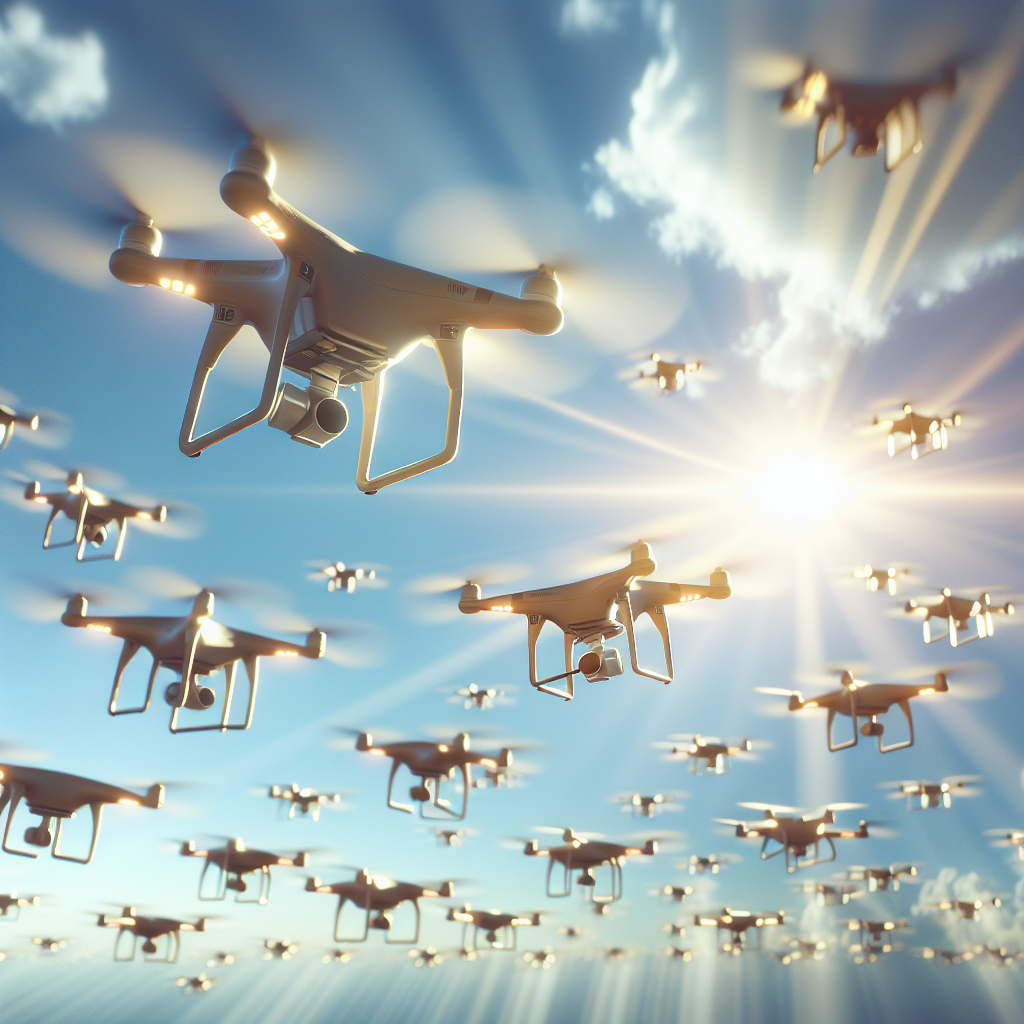
Swarm technology, where multiple drones operate in coordination, holds great potential for obstacle avoidance. By sharing data and working collaboratively, drone swarms can navigate complex environments more efficiently and safely.
Quantum Computing
The advent of quantum computing could revolutionize data processing for drone technology. Quantum computers can handle complex calculations much faster than traditional computers, enabling more advanced obstacle avoidance algorithms and real-time decision-making.
Conclusion
Advanced obstacle avoidance technology is revolutionizing aerial safety, making drones more reliable and versatile than ever before. As sensors, AI, and machine learning continue to advance, drones will become even more adept at navigating complex environments, unlocking new possibilities across a wide range of industries. The integration of cutting-edge technologies such as 5G, swarm intelligence, and quantum computing will further enhance the capabilities of obstacle avoidance systems, ensuring that drones remain at the forefront of innovation in aerial safety.
Share this content:


Post Comment