Revolutionizing Skies: Future of Drone Technology Unveiled
Introduction
The rapid advancement of drone technology is reshaping the way we perceive and interact with the skies. What was once a niche hobbyist tool has morphed into a powerful asset across various sectors such as agriculture, logistics, surveillance, and entertainment. As we stand on the brink of a new era in aerial technology, it’s imperative to explore the potential futures that drones hold and how they are set to revolutionize the skies.
The Current Landscape of Drone Technology
Drones, or Unmanned Aerial Vehicles (UAVs), have seen exponential growth in both usage and technological sophistication. Current drone applications span from recreational photography to complex industrial inspections. Key advancements, such as enhanced battery life, improved sensors, and advanced AI algorithms, have significantly broadened their capabilities.
In the commercial sector, companies like Amazon and UPS are experimenting with drone delivery systems, promising faster and more efficient logistics solutions. In agriculture, drones equipped with multispectral sensors provide farmers with detailed crop health analytics, allowing for precision agriculture practices that optimize yield and reduce resource usage.
Emerging Technologies and Innovations
Autonomous Drones
The future of drone technology heavily leans towards autonomy. Autonomous drones, powered by advanced AI and machine learning algorithms, are set to revolutionize industries by reducing the need for human intervention. These drones can operate in complex environments, making real-time decisions and learning from their surroundings to improve performance.
Swarm Technology
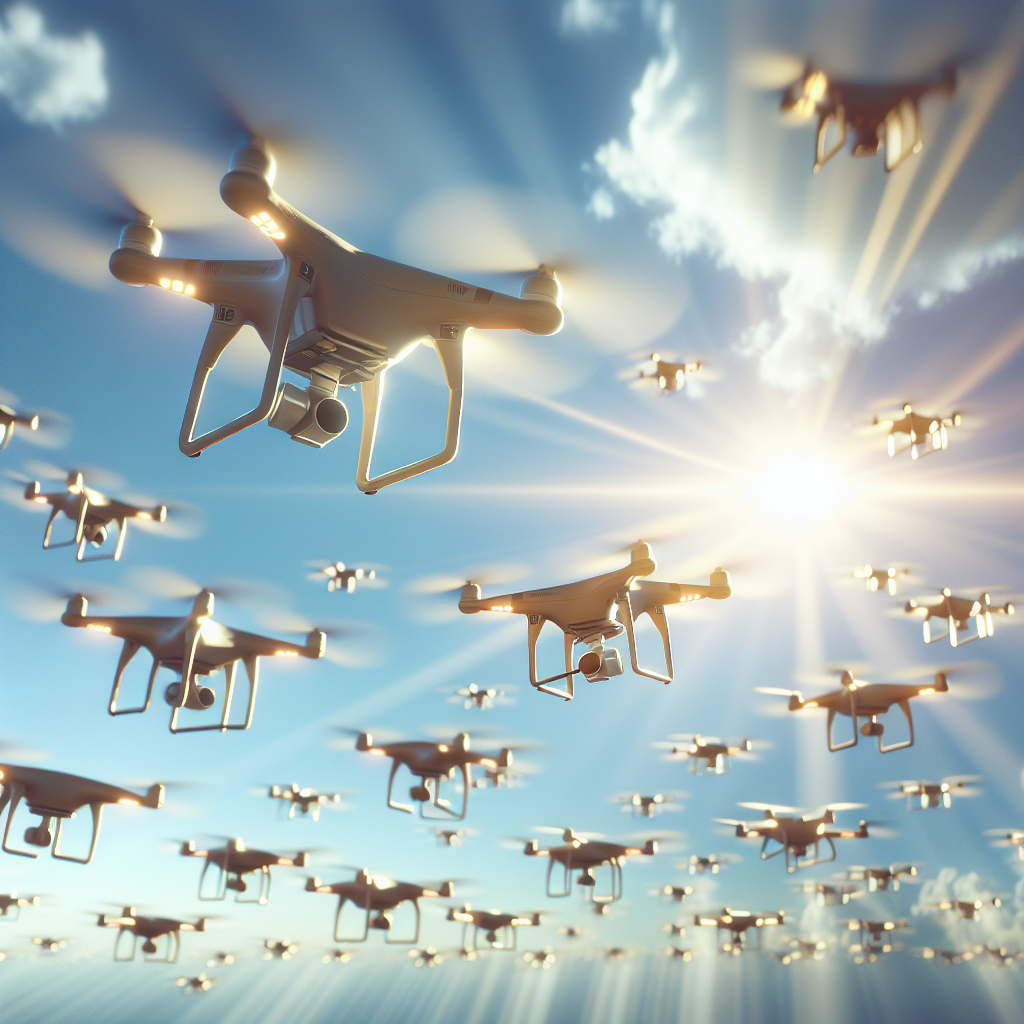
Inspired by nature, swarm technology is a breakthrough in drone innovation. This technology allows multiple drones to operate as a cohesive unit, communicating and collaborating in real-time to complete tasks more efficiently. From large-scale search and rescue operations to dynamic light shows, swarm drones offer a wide array of applications.
Advanced Materials and Battery Technology
The development of lightweight, durable materials and more efficient battery technologies will further enhance drone capabilities. These advancements will lead to longer flight times, increased payload capacities, and drones that can withstand harsh environmental conditions. Innovations in energy storage, such as solid-state batteries and solar-powered drones, are pivotal in extending operational ranges.
Regulatory Challenges and Solutions
As drone technology advances, regulatory frameworks must evolve to ensure safety and privacy. Current regulations vary significantly across regions, often hindering widespread adoption. The integration of drones into controlled airspace remains a complex issue that regulators and industry leaders are actively addressing.
Solutions include the development of Unmanned Traffic Management (UTM) systems, which facilitate communication between drones and existing air traffic control. These systems aim to prevent collisions and ensure safe integration into national airspace systems. Additionally, the implementation of Remote Identification (RID) technologies is crucial for monitoring and managing drone activities.
Impact on Various Industries
Healthcare
Drones are set to transform healthcare delivery by providing rapid transportation of medical supplies and samples, especially in remote or inaccessible areas. During emergencies, drones can deliver life-saving equipment such as defibrillators faster than traditional methods, potentially increasing survival rates.
Infrastructure and Construction
In the construction industry, drones are being utilized for site surveys, progress monitoring, and safety inspections. They provide high-resolution aerial images and 3D models, enabling project managers to make informed decisions and improve project efficiency and safety.
Environmental Monitoring
Environmental agencies are leveraging drone technology for monitoring ecosystems, wildlife, and natural resources. Drones equipped with sensors can collect valuable data on air and water quality, track animal populations, and even assist in reforestation efforts by planting seeds in deforested areas.
The Role of AI and Machine Learning
Artificial Intelligence (AI) and Machine Learning (ML) are integral to the evolution of drone technology. AI algorithms enable drones to process vast amounts of data and make autonomous decisions. Machine Learning enhances this capability by allowing drones to learn from experiences and improve their performance over time.
These technologies are crucial for developing autonomous navigation systems, real-time object detection, and obstacle avoidance. The integration of AI and ML into drones will continue to push the boundaries of what is possible, leading to smarter and more efficient aerial systems.
Challenges and Considerations
Despite the promising future of drone technology, several challenges remain. Privacy concerns are at the forefront, as drones equipped with cameras and sensors raise issues regarding surveillance and data collection. Ensuring data security and developing clear guidelines for drone operations is essential to address these concerns.
Additionally, technological limitations such as limited battery life and payload capacity are ongoing challenges. Continued investment in research and development is necessary to overcome these hurdles and unlock the full potential of drones.
Conclusion
The future of drone technology holds immense promise, with the potential to revolutionize industries and transform the skies as we know them. As advancements in autonomy, AI, and materials continue to unfold, drones will become increasingly integrated into our daily lives. However, realizing this future requires careful consideration of regulatory frameworks, privacy concerns, and technological limitations.
By addressing these challenges and fostering collaboration between industry leaders, governments, and researchers, we can unlock the full potential of drones, paving the way for a future where the skies are not just a domain for flight, but a platform for innovation and progress.
#ChatGPT assisted in the creation of this article.
Share this content:


Post Comment