Advanced Drone Collision Avoidance Techniques Revealed

Introduction
The proliferation of drone technology across various sectors—from delivery services and agriculture to surveillance and entertainment—has created a burgeoning need for effective collision avoidance systems. As drones become more common, both in civilian and commercial applications, ensuring their safe operation in increasingly crowded airspaces is paramount. This article delves into advanced drone collision avoidance techniques, highlighting the latest technological advancements and regulatory considerations.
Understanding Collision Risks
Drones, particularly those operating autonomously, face a myriad of collision risks. These include obstacles such as buildings, trees, and other drones, as well as environmental factors like birds and weather conditions. The need for sophisticated collision avoidance systems is underscored by the potential consequences of drone collisions, which can range from damage to property and injury to people, to severe disruptions in services.
Sensors: The Eyes of Drones
At the core of collision avoidance systems are sensors, which provide real-time data to drones about their surroundings. The most common sensors include ultrasonic sensors, infrared sensors, LiDAR, and cameras. Each type offers distinct advantages:
- Ultrasonic Sensors: These are typically used for short-range detection and are effective in measuring distances to nearby objects, making them ideal for avoiding collisions with close obstacles.
- Infrared Sensors: These sensors are useful for detecting heat signatures and can be effective in low-light conditions.
- LiDAR: Offering high precision, LiDAR systems use laser pulses to create detailed 3D maps of the environment, providing crucial data for obstacle detection and avoidance.
- Cameras: Visual cameras, often paired with image processing software, allow drones to interpret visual data, enabling sophisticated obstacle recognition and navigation.
Advanced Algorithms for Collision Avoidance
Sensors provide the data, but advanced algorithms are necessary to process this information and make real-time decisions. Modern collision avoidance systems leverage several algorithmic approaches:
- Path Planning Algorithms: These algorithms, such as A* and D* Lite, calculate the optimal path for a drone to avoid obstacles while reaching its destination.
- Machine Learning: By using large datasets, machine learning models can predict potential collision scenarios and adjust flight paths dynamically. Deep learning, a subset of machine learning, is particularly promising for recognizing complex patterns in data.
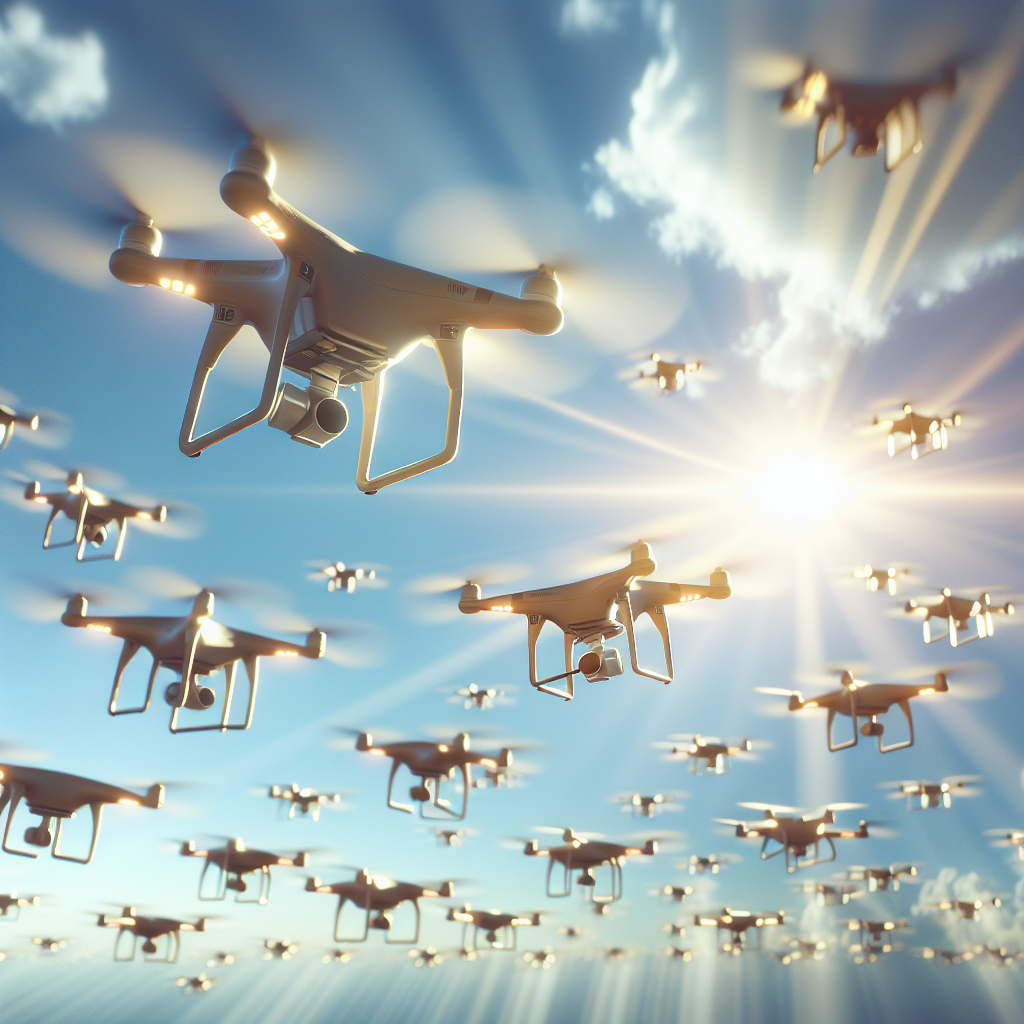
- Swarm Intelligence: Inspired by the collective behavior of insects, swarm intelligence involves drones working collaboratively, sharing data to enhance situational awareness and avoid collisions.
Integration of AI and Real-Time Processing
Artificial Intelligence (AI) plays a critical role in modern collision avoidance systems. AI algorithms can process vast amounts of data in real-time, allowing drones to adapt to rapidly changing environments. The integration of AI with edge computing devices ensures that data is processed locally, reducing latency and enabling faster decision-making.
Regulatory Frameworks and Standards
As drone technology advances, regulatory bodies worldwide are establishing guidelines to ensure safety and reliability. In the United States, the Federal Aviation Administration (FAA) has been at the forefront of developing drone regulations. These regulations include requirements for remote identification, flight over people, and operations in controlled airspace.
Internationally, organizations like the International Civil Aviation Organization (ICAO) are working towards global standards for unmanned aircraft systems. Compliance with these regulations is critical for manufacturers and operators, as it ensures that drones are equipped with approved collision avoidance capabilities.
Challenges and Future Directions
Despite technological advancements, several challenges remain in the field of drone collision avoidance. These include the need for improved sensor accuracy in adverse weather conditions, better integration of heterogeneous data sources, and the development of more robust AI models that can handle unexpected scenarios.
Looking ahead, the future of drone collision avoidance may involve even greater levels of autonomy and intelligence. The integration of quantum computing could revolutionize real-time data processing, while advancements in sensor technology could enable drones to operate safely in even the most challenging environments.
Conclusion
Advanced drone collision avoidance techniques are critical to the safe and efficient operation of drones in diverse applications. As technology continues to evolve, the development of sophisticated sensors, algorithms, and AI systems will play a pivotal role in mitigating collision risks. By adhering to regulatory standards and pushing the boundaries of innovation, the drone industry can unlock new opportunities while ensuring safety and reliability in the skies.
#ChatGPT assisted in the creation of this article.
Share this content:


Post Comment