Master Drone Exposure Settings for Stunning Aerial Shots
Introduction
Aerial photography and videography have revolutionized the way we capture the world. With drones becoming increasingly accessible, enthusiasts and professionals alike can capture breathtaking images and videos from perspectives that were once impossible. However, mastering drone exposure settings is crucial to achieving stunning aerial shots. This article will delve into the essential exposure settings for drones, providing you with the knowledge to elevate your aerial photography and videography.
Understanding Exposure
Before diving into specific settings, it’s essential to understand what exposure means in photography. Exposure is the amount of light that reaches the camera sensor, determining how bright or dark an image appears. It is influenced by three main factors: aperture, shutter speed, and ISO. These three elements form the exposure triangle.
Aperture
Aperture refers to the opening in the camera lens through which light enters. The size of this opening is measured in f-stops. A lower f-stop number (e.g., f/2.8) means a larger opening, allowing more light to hit the sensor, which is ideal for low-light conditions. Conversely, a higher f-stop number (e.g., f/16) means a smaller opening, which is suitable for bright conditions and achieving a greater depth of field.
Shutter Speed
Shutter speed is the amount of time the camera’s shutter remains open to allow light to reach the sensor. It is measured in seconds or fractions of a second. A fast shutter speed (e.g., 1/1000) freezes motion, which is useful for capturing fast-moving subjects. A slow shutter speed (e.g., 1/30) allows more light to enter, which can create motion blur for artistic effect or improve exposure in low-light situations.
ISO
ISO refers to the camera sensor’s sensitivity to light. A lower ISO value (e.g., ISO 100) means less sensitivity, which is ideal for bright conditions to avoid overexposure. A higher ISO value (e.g., ISO 1600) increases sensitivity, which is useful in low-light conditions, but can introduce noise or grain to the image.
Choosing the Right Exposure Settings for Aerial Shots
Capturing stunning aerial shots requires a careful balance of aperture, shutter speed, and ISO. Here are some tips to help you choose the right exposure settings for various aerial photography scenarios.
Daylight Shooting
When shooting in bright daylight conditions, it is generally advisable to use a small aperture (high f-stop) to prevent overexposure and ensure a wide depth of field. A fast shutter speed is recommended to capture sharp images, especially if there’s movement in the scene or if the drone is in motion. Keep the ISO as low as possible to maintain image quality.
Golden Hour Photography
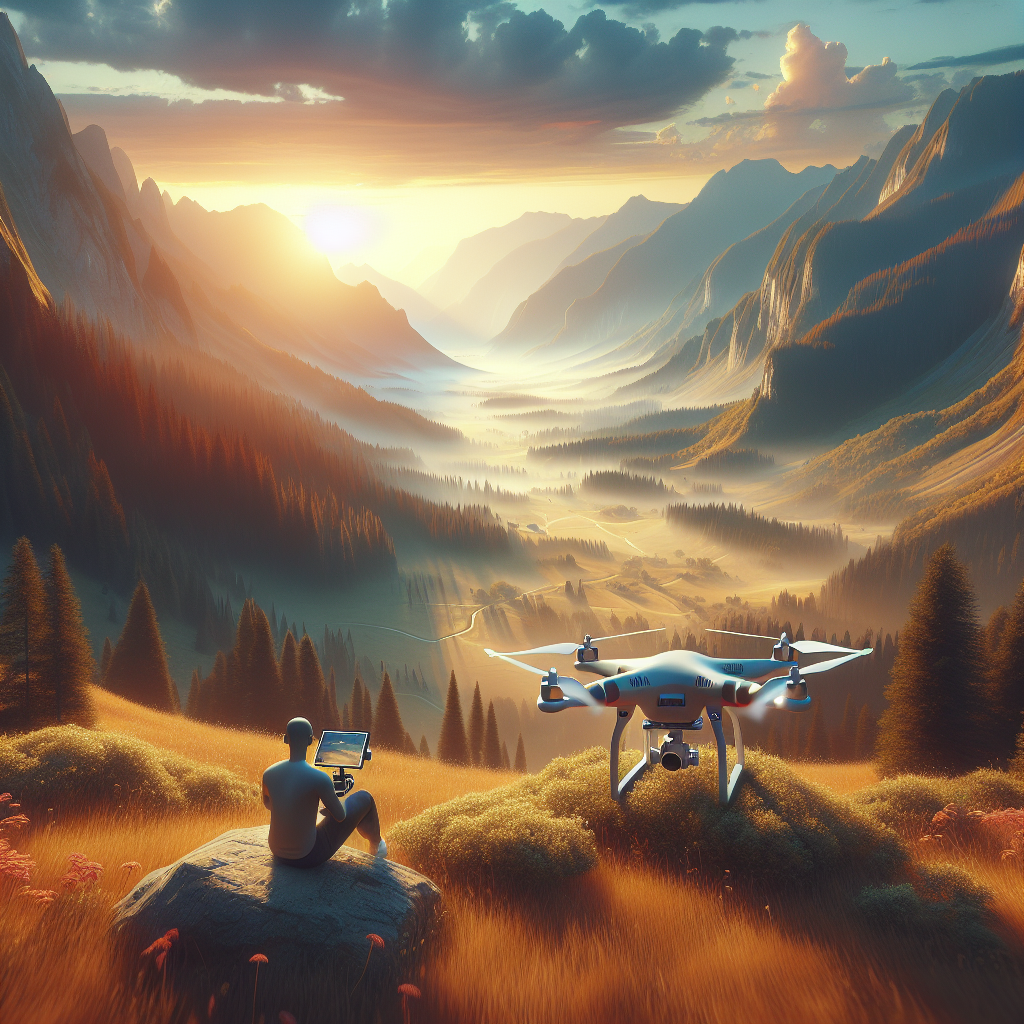
The golden hour, shortly after sunrise or before sunset, offers soft, warm lighting that enhances the beauty of aerial shots. During this time, you can use a wider aperture (lower f-stop) to allow more light in and create a pleasing bokeh effect. A moderate shutter speed will help capture the ambient light, while a slightly higher ISO may be necessary as the light fades.
Low-Light Conditions
Shooting in low-light conditions, such as during twilight or at night, requires careful consideration of exposure settings. Use a wide aperture to maximize light entry, and a slower shutter speed to capture more ambient light. However, be cautious of camera shake, as drones are more susceptible to movement. A higher ISO may be needed, but be mindful of noise and consider using noise reduction in post-processing.
Capturing Motion
When capturing motion, such as vehicles, water, or people in action, a fast shutter speed is crucial to freeze the action. Adjust the aperture to control the depth of field, and use the lowest possible ISO to maintain image clarity. Alternatively, you can experiment with slower shutter speeds to create motion blur, adding a dynamic element to your shots.
Using Exposure Compensation
Exposure compensation is a valuable tool for adjusting the exposure in challenging lighting situations. It allows you to manually increase or decrease the exposure level set by the camera’s automatic settings. This is particularly useful when dealing with high-contrast scenes or when the camera’s metering system struggles to achieve the desired exposure.
Utilizing ND Filters
Neutral Density (ND) filters are essential accessories for drone photographers. They reduce the amount of light entering the camera, allowing for slower shutter speeds or wider apertures without overexposing the image. ND filters are particularly useful in bright conditions, helping to create motion blur or achieve a shallow depth of field.
Post-Processing Techniques
Even with the best exposure settings, post-processing can further enhance your aerial shots. Software like Adobe Lightroom or Photoshop allows you to fine-tune exposure, contrast, highlights, and shadows. Use these tools to correct any exposure issues, enhance colors, and add creative effects to your images.
Conclusion
Mastering drone exposure settings is key to capturing stunning aerial shots that stand out. By understanding the exposure triangle, choosing the right settings for different lighting conditions, and utilizing tools like exposure compensation and ND filters, you can elevate your aerial photography and videography to new heights. Remember, practice makes perfect, so experiment with different settings and techniques to discover what works best for your style and the scenes you capture. With the right exposure settings, your drone can become a powerful tool for creating breathtaking images and videos from above.
#ChatGPT assisted in the creation of this article.
Share this content:

Post Comment