Revolutionary Drone Tech Innovations Transforming Aerial Solutions

Introduction
In recent years, drone technology has undergone a meteoric rise, reshaping multiple industries and revolutionizing how we perceive aerial solutions. From humble beginnings in military applications to becoming a ubiquitous tool in commercial, industrial, and recreational sectors, drones have transformed the landscape of aerial solutions. This article delves into the revolutionary drone tech innovations that are transforming these solutions, enhancing efficiency, safety, and accessibility across various fields.
The Evolution of Drone Technology
The journey of drone technology began with the need for unmanned aerial vehicles (UAVs) in military operations, primarily for reconnaissance and surveillance. Over time, as technology advanced, the scope of drones expanded. The integration of GPS, high-definition cameras, and sophisticated sensors allowed drones to transition into civilian and commercial applications. Today, drones are equipped with advanced AI and machine learning capabilities, enabling autonomous operations and complex data analysis.
Miniaturization and Affordability
One of the most significant breakthroughs in drone technology is miniaturization. The development of smaller, more compact drones has made them more accessible and affordable to the masses. These smaller drones maintain the same level of functionality as their larger counterparts, making them ideal for various applications, from entertainment to industrial inspections. The reduction in size has also facilitated the deployment of drones in confined or hazardous environments where larger drones would be impractical.
Innovations in Aerial Imaging and Mapping
Drones have revolutionized aerial imaging and mapping, providing high-resolution data that was previously difficult or expensive to obtain. Innovations in camera technology, such as gimbal stabilization and 360-degree imaging, have enhanced the quality and precision of aerial imagery.
3D Mapping and Photogrammetry
Drones equipped with advanced photogrammetry software can create detailed 3D maps and models of landscapes, buildings, and infrastructure. This capability is invaluable in sectors like construction, agriculture, and environmental monitoring, where accurate spatial data is crucial. The speed and efficiency of drones in capturing vast areas in a short time frame have made them indispensable tools for surveyors and engineers.
Thermal Imaging
Thermal imaging has added a new dimension to drone capabilities, allowing for heat detection and analysis from the air. This technology is particularly beneficial for search and rescue operations, firefighting, and industrial inspections, where detecting heat signatures can provide critical information. For example, drones equipped with thermal cameras can identify hotspots in wildfires, guiding firefighting efforts and enhancing safety.
Autonomous Flight and AI Integration
The integration of artificial intelligence and machine learning has propelled drones into a new era of autonomy. Drones are now capable of making real-time decisions, adapting to changing environments, and executing complex missions without human intervention.
Obstacle Avoidance Systems
Modern drones are equipped with sophisticated obstacle avoidance systems that utilize sensors and AI algorithms to navigate around obstacles in real-time. This technology not only enhances the safety of drone operations but also allows drones to operate in complex environments, such as urban areas or dense forests, with minimal risk of collision.
Swarm Technology
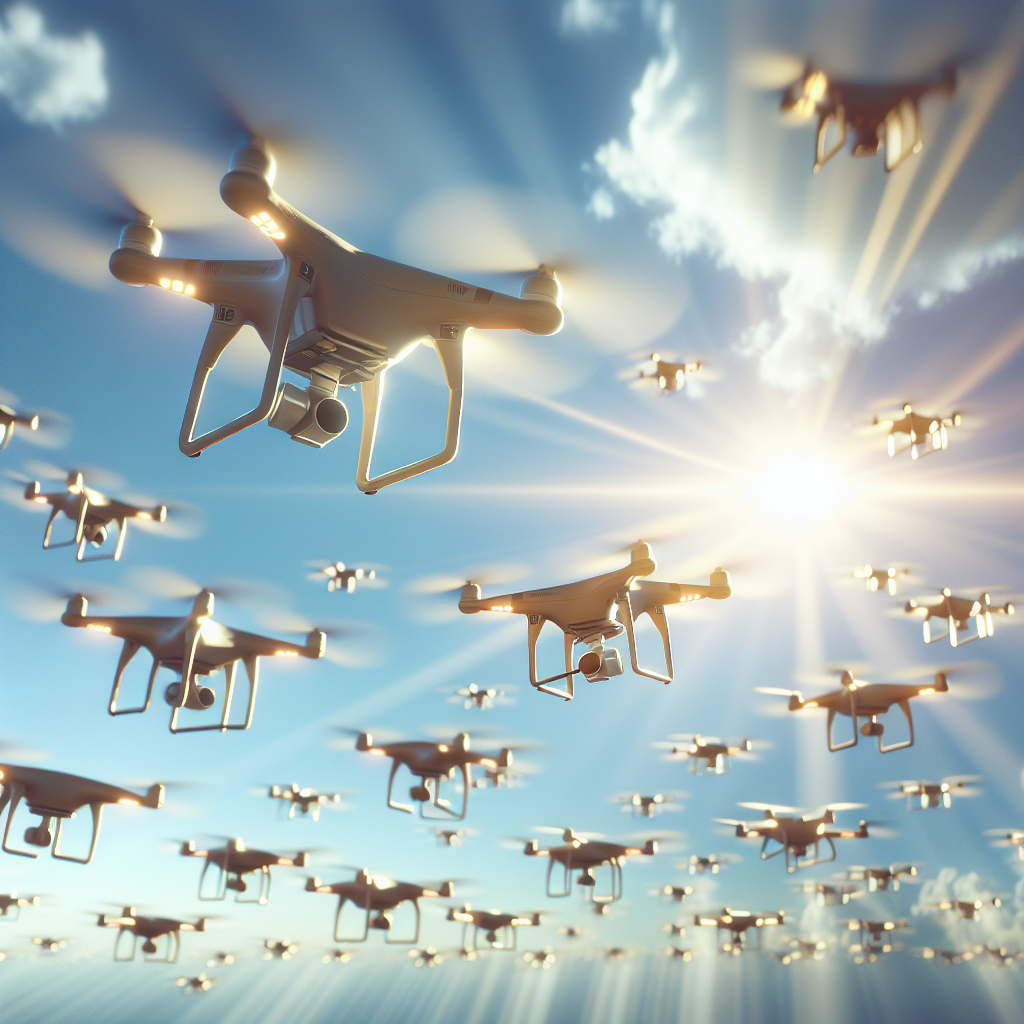
Swarm technology represents a significant leap forward in drone capabilities. By leveraging AI and machine learning, multiple drones can operate in unison, coordinating their actions to complete tasks more efficiently. This technology has applications in areas such as agriculture, where drone swarms can cover large fields for crop monitoring or pesticide spraying, and in search and rescue missions, where coordinated efforts can expedite the search process.
Transforming Industries with Drone Solutions
The impact of drone innovations extends across various industries, offering new solutions and efficiencies.
Agriculture
In agriculture, drones have revolutionized crop monitoring and management. Equipped with multispectral sensors, drones can assess crop health, identify areas of stress, and optimize irrigation and fertilization strategies. This precision agriculture approach maximizes yield and reduces resource waste, making farming more sustainable and profitable.
Infrastructure and Construction
Drones are transforming the infrastructure and construction industries by providing real-time data and insights. They are used for site surveys, progress monitoring, and inspections, reducing the need for manual checks and improving safety. Drones can quickly survey large areas, create detailed site maps, and identify potential issues before they become costly problems.
Emergency Response and Public Safety
In emergency response and public safety, drones offer rapid deployment and real-time situational awareness. They are used in search and rescue operations, disaster assessment, and law enforcement activities. Drones provide a safe and efficient means to gather intelligence and assess situations without putting human lives at risk.
Regulatory Challenges and Future Prospects
While drone technology continues to advance, regulatory challenges remain a significant hurdle. Governments worldwide are working to develop frameworks that balance innovation with safety and privacy concerns.
Regulatory Developments
Regulators are focusing on issues such as airspace management, privacy protection, and security. The introduction of unmanned traffic management (UTM) systems aims to integrate drones into the national airspace safely. These systems ensure that drones can operate alongside manned aircraft without compromising safety.
Future Innovations
The future of drone technology is promising, with ongoing research and development paving the way for even more advanced capabilities. Innovations such as drone delivery systems, passenger drones, and enhanced AI-driven analytics are on the horizon. As these technologies mature, drones will become even more integral to our daily lives, offering solutions that were once the realm of science fiction.
Conclusion
Revolutionary drone tech innovations are transforming aerial solutions across a multitude of sectors. From enhancing imaging and mapping capabilities to introducing autonomous flight and AI integration, drones are reshaping industries and offering new possibilities for efficiency, safety, and sustainability. As technology continues to evolve and regulatory frameworks adapt, the potential for drones is limitless, heralding a new era of aerial solutions that will continue to push boundaries and redefine what is possible.
#ChatGPT assisted in the creation of this article.
Share this content:


Post Comment